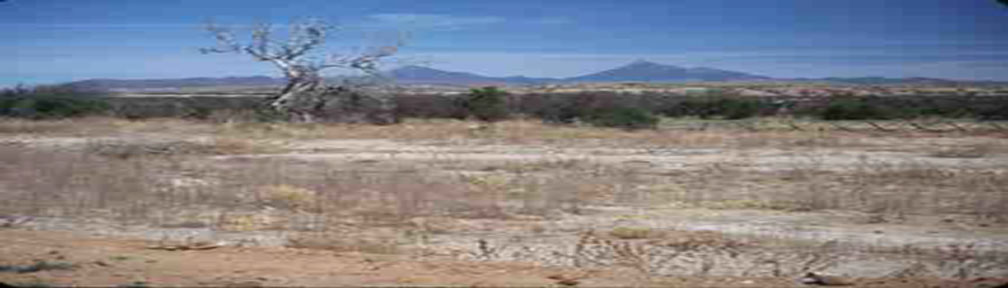
The case of the missing Rivers in Arizona— Is it the Santa Cruz? or the Gila? or the Salt? (USGS Photo)
Groundwater Awareness League—representing the voice of the people — and giving them the facts and figures to speak up about their water supply!!
The Groundwater Awareness League [GAL] is a not-for-profit educational group organized to inform the public regarding the dangerous levels of depletion and pollution of groundwater in Arizona. The group encourages scientific research, synthesis of data from various water agencies, and formulating concrete measures to ensure the right of every citizen to understand and to have clear data concerning the condition of our water resources and to have access to clean, healthy, and adequate water supply.
Groundwater is a natural resource.
The 1980 Groundwater Code states groundwater is a public resource.
Who should have first rights to this natural, public resource?
Copper? Cotton? Cows? Alfalfa?
In Arizona, people are last in line. Conservation laws apply only to us,
who use only an average of 16% - 20% of groundwater—statewide.G-A-L brings "Grandmothering" to Arizona! What is "Grandmothering"?
In spite of the creation of National Forests for watersheds in the dry West — Forest officials are considering the destruction of needed watershed at the Santa Ritas, Devils Canyon-Oak Flat
and the Grand Canyon... Honor our National Forests—they are up next for destruction by mining
Coming soon—information on Indian water settlement
U of A and the Gila River Community just sponsored a Conference on Indiginous water rights. It was very informative--and I leaned a lot. For example, I had been saying that the Native Americans in Arizona had been fighting in courts for water that had been drained from their rivers by white settlers and their dams for 30 years. I was wrong--it was nearly 100 years! It sure makes a difference when you know the facts. The documentation will be posted here.
First three relevant points:
1)
In 1908 the Supreme Court ruled that when the Native American reservations were set aside, the right for water to sustain the reservation was understood. [Winters v US].
2)
The water rights settlements for Arizona Native Americans went to the jurisdiction of Congress because the Arizona courts refused to grant them any water in spite of the prior appropriation rule and Winters v US, even for basic survival. In other states, the state wrote the water settlements.
3)
The water settlements were calculated on the amount of water each Nation needed to return to its traditional lifestyle, such as irrigation for crops and other beneficial uses (did not include artificial lakes, watering of grass lawns, water fountains, etc.)
The Gila River Community water settlement was a true win. Here is a timeline and summary of the hardships they went through as they went from the "bread basket" of the Valley to dire deprivation and stavation--until 2004! --coming soon!
My Opinion that the Tucson Star
would not print and Phoenix Republic would not cover:
Water Management Arizona Style
The CAP personel have known for years that there could be a problem obtaining future water supplies. In 2008, government water officials convened a Tucson/Pima County Water Study for a sustainable water future. The representatives of CAGRD and CAP both were claiming that they had water in McMullan and Butler Aquifers. A second “water supply” would come from a desalination plant at Rocky Point. In both cases, CAP officials had not asked the people who would be losing their water supply to the CAP pipeline how they felt about it..
Upon hearing claims in a the Water Study, I investigated and found that the McMullen Valley area was inhabited. I contacted the Chamber at Wenden and asked if they knew about the claims of CAGRD and CAP stating they owned McMullen Aquifer. The citizens of Salome and Wenden definitely did not want their water supply drained to supply 60 golf courses, artificial lakes and swimming pools in Phoenix....
Read more...
Tucson, other cities could be hit by CAP shortage much sooner than expected
by Tony Davis, June 15, 2014
For the first time, the state agency that operates the multibillion-dollar Central Arizona Project warns that water shortages could hit Tucson and Phoenix as soon as five years from now.
CAP and Lake Mead story--credit where credit is due
Tony Davis, June 17, 2014
My story in Sunday's paper warning of the potential consequences to the Central Arizona Project, Las Vegas and Hoover Dam power supplies from a steadily dropping Lake Mead got a lot of reaction. But I want to say that in reality, we weren't the first media outlet to cover this, although ours…
NY Times on the Central Arizona Project and shortages
Tony Davis, June 18, 2014 11:09 am
Last Wednesday, the New York Times ran a followup story to our article of a week ago -- June 15 -- about warnings from the Central Arizona Project that CAP shortages could hit Tucson and Phoenix a lot sooner than most authorities had previously thought -- in as soon as 5 to 8 years.
Official: Phoenix could survive future CAP shortage
By Tony Davis, June 25, 2014 1:21 pm
Phoenix won't run dry if the CAP runs short, official says.
AZ State Legislative Issues
and Updates concerning water
Opinion in Tucson Citizen
Water: Legislature asleep at the faucet
Nothing accomplished in 1900 - 2012
Can we do better in 2014?
A wish list of needed water legislation
What are the major problems within AMA's?
Water experts in 2001 Governor Hull's Commission Report (summary) * dealt with problems within Active Management Areas (AMA). It outlined three major problems in these "managed" areas. Forty-nine persons met over 200 times over a year and a half to come up with a viable plan with an appropriate list of needed legislation. The Arizona State legislators effectively ignored it—no bills were passed. See HB2582.
This report was called by the Governor because of a scathing report on Arizona water management that appeared in the July 2000 issue of U. S. Water News headlined: Arizona facing water crisis with growth. It was cause for alarm, Arizona was getting national recognition for its lack of water management. In spite of the recommendations by the water experts of the Governor's commission, the legislators avoided passing a single bill. The conditions outlined in the U. S. Water News report still exist today.
Governor Hull's Commission principal recommendations within AMA's:
1) Limit exempt wells
2) Identify specific riparian areas and limit pumping adjacent to prevent draining
3) Allow AMA’s to create sub-basin―smaller management areas, needed in such areas as Arivaca and Queen Creek. *Entire report
A major component of the problem is that in order to help developers continue to develop in "managed" areas that could not fulfill the recharge requirements, in 1993 the state legislators enacted the Groundwater Replenishment District scam.
Our Legislators let us down!! Water regulation loses again!!
This week, our legislators continued with the heritage of the 1980 Groundwater Code: Do nothing. I can’t see that doing nothing requires legislation, but that’s the rule in arid Arizona. We have had Governor Hull’s Water Commission Report in 2001, Governor Napolitano’s “Water-Listening Forum” and Town Hall in 2004 and the Statewide Water Advisory Group (SWAG) in 2006. Yet the legislators refuse to follow the advice of experts.
Specifically, they voted to enact a water adequacy requirement for new developments outside of AMA’s if there is a unanimous vote by the city council or board of supervisors. How can people in rural areas, with councils and boards made up of the vested interests, ever hope to get anything accomplished with this regulation? So much for democracy where majority rules.
It’s not like the bill would have done much anyway. The ridiculous 100-year water supply certification allows sucking the water table down to bedrock or 1,200 feet (whichever comes first) within 100 years (if there is no drought or exempt industry that can pump all they want in your area) before curtailing development. The law does not protect surface water or riparian areas—it doesn’t even protect water in conservation areas, national forests or wildlife refuges—so there is plenty of concern that Prescott Valley will proceed with its plan to drain the Verde River. Note that fish, birds, and animals have to have surface water to survive- 1,200 feet is not going to help them at all.
Who is willing to make the tough decisions about water?
May I be so bold as to suggest that we take those measures now and not wait until we have sucked the water table down to bedrock or 1,200 feet? For full report . . .
GET INFORMED: Water Info Sheets—
ARIZONA WATER INFO SHEET—NO. 1 (sent to AZ Legislators 4/11/07)
Protecting Habitat
ARIZONA WATER INFO SHEET—NO. 2 (sent to AZ Legislators 4/19/07)
Assured water supply
Status of current applications
ARIZONA WATER INFO SHEET—NO. 3 (sent to AZ Legislators 5/4/07)
Colorado River Water, ie. CAP: A blessing or a dilemma?
ARIZONA WATER INFO SHEET—NO. 4 (sent to AZ Legislators 5/17/07)
Arizona Groundwater Code
(sent to AZ Legislators 6/1/07)
Landmarks in Arizona Water Planning
As you will see by the following reports, there has been an increased concern for water management in Arizona since 2000. CAP water did not solve all water problems because 80% of land area does not receive CAP. The following reports are long, ponderous and repetitive, so you won't have time to read them all--but knowing of their existence does seem important. Keep in mind that you are being spared another 2,000 pages of technocrat reports written annually on Arizona water by universities and USGS.
Below is a brief summary of each part. For the entire report, see Landmarks in Arizona Water Planning.
1963 USGS Report
“Arizona’s water problem is grave. The beautiful scenery, fine climate and fertile soil, like those of other southwestern states, have combined to entice an even larger number of people to settle there, and water demands have grown accordingly.”
1980 Groundwater Code
The plan was to get heavy agriculture use off of groundwater. The farmers did not cooperate, and urban sprawl was mushrooming in both Phoenix and Tucson.
Summary of Code
1985 Colorado River water arrives in Arizona
CAP was to solve all Arizona’s water problems. (Future Water Info Sheet will detail CAP’s history in Arizona). Fifteen years later a report came out in U.S. Water News, indicating otherwise:
2000 U.S. Water News Online
"Arizona facing water crisis with growth"
If Arizona doesn't manage its water better, some of the state's shiny new cities could dry up like the deserts from which they sprang.
2002: Governor Hull’s Water Management Commission Report
Governor Hull's Commission principal recommendations for the AMA’s
1) Limit exempt wells
2) Identify specific riparian areas and limit pumping adjacent to prevent draining
3) Allow AMA’s to create sub-basin, or smaller, management areas, needed in such areas as Arivaca and Queen Creek.
Legislative Package
2004: Report by Arizona Policy Forum Outlines Risks of Rural Water Situation
The report recommends legislative enactment of new laws to achieve three "policy goals":
1) Require that a long-term physical water supply must be demonstrated before new residential development is allowed to proceed.
2) Allow a new well to be drilled to serve a new residential use only if there is a 100-year water supply for the proposed use.
3) Establish a state program of impact fees on new residential development to provide matching funds for water resources planning, acquisition and infrastructure to applicants demonstrating significant problems meeting current or projected residential water demands—with an early emphasis on assisting rural areas."
2004: Eighty-Fifth Arizona Town Hall "Arizona’s Water Future: Challenges and Opportunities”
“Water is the lifeblood of Arizona's vitality, lifestyle and growth. Fortunately, Arizona's leaders, from the time of statehood and even before, had the vision and foresight, intelligence and tenacity to plan and implement policies and projects to develop a reliable and safe water supply. Current and future leaders must step forward in today's climate of further unprecedented growth and current drought conditions to continue that safe and reliable water supply. Following are just a few of the major recommendations that the record-setting 177 participants at the 85th Town Hall developed that reflect what they believe must take place to accomplish the mission of maintaining a reliable and safe water supply for the future.”
2004: Governor’s Water Listening Session/Tucson & Phoenix
No transcript or list of persons who commented was ever made available.
If any action was taken, it is not apparent.
Comments were made by Holly Richter, Upper San Pedro Program Manager, The Nature Conservancy in Arizona.
Comments from Tucson Groundwater Users Committee.
2006: Eighty- Eighth Arizona Town Hall: “ Arizona’s Rapid Growth and Development: Natural Resources and Infrastructure” Report
At the conclusion of two Town halls held in 2006, the participants were asked to rank priorities for Arizona, Water Resources came in second, after land use. Under water resources, they prioritized three strategies:
1) Maximize conservation strategies and efforts.
2) Develop strategies for sustainable future water supplies.
3) Develop measurement and regulation of resources, particularly outside Active Management Areas.
2006: ADWR Rural Water Supply Development and Management (SWAG
There was general agreement about the need for cities and counties outside of active management areas (AMA) to have the authority to require the demonstration of water supply adequacy before a subdivision is approved.
Arizona Water Resources (ADWR) recommended bills for 2007 legislative session
2007 Tucson Town Hall
Given the rapid growth of Tucson, the rest of Central Arizona and the State, the following is recommended to the Tucson Business Community.
Is someone trying to tell the Legislators something? And why aren't they listening?
Relevant Definitions
AMA = Active Management Area. There are five of them in central Arizona: Prescott, Maricopa, Pinal, Pima and Santa Cruz. The management means bringing in CAP water for muncipal use, so that agriculture, including subsidized cotton, can continue to empty the aquifers. Prescott and Santa Cruz AMA's do not have the luxury of the CAP solution, so they have to find other solutions. A group of agriculture users in the Santa Cruz AMA have gotten together to form an agreement to curtail their use in line with the water available.
Assured water supply—applies to the five active management areas: Prescott, Maricopa, Pinal, Tucson and Santa Cruz.
Assured water means there is a water under the region, and that there is renewable water to replace it (ie. CAP water).
Adequate water supply—applies to rural areas outside of Active Management Areas. Adequate water means there is adequate water for pumping down to bedrock or 1,200 feet within 100 years.
CAP = Central Arizona Project. A canal that brings Colorado River water to three Arizona counties with the highest water use: Maricopa, Pinal and Pima.
Recharge—water put back into an aquifer or water supply by natural means of rain water or other means, such as effluent and CAP.
Colorado River & Drought
May 2015: What severe drought on the Colorado Basin looks like W. Post
Jan. 2014: Colorado River drought forces a painful reckoning for [SW] states NYTimes
Feb. 2012: Where the river runs dry NYTimes
Latest on CAP allocations:
Arizona water allocations bumping up against limits of Colorado River flows
Support clean and plentiful water in Arizona by supporting mining law reform!
Breaking news!
Water Use in Southwest Heads for a Day of Recckoning — NYTimes
Phoenix and Tucson make top 10 list for running out of water!
From 24/7 Wall St. Finance News:
3. Phoenix
Major Water Supply: Colorado River Basin
Population (U.S. rank): 1,593,659 (5th)
Population Growth Rate: 21.2% since 2000
Average annual rainfall: 8.3 in.
Like many of the other western cities on this list, Phoenix is extremely dependent on water imported from the Colorado River. This is because nearly half of the water the city's residents use comes from this significant source. As the Colorado River Basin enters the eleventh year of its drought, the city's reliance on the river may soon become a serious problem. If the drought continues, water deliveries to Arizona could potentially be cut back. To keep up a sufficient water supply, Phoenix is adopting an aggressive campaign to recycle water, replenish groundwater and try to dissuade over-consumption. Time will tell if it these measures will be enough.
8. Tucson, Ariz.
Major Water Supply: Local ground water
Population (U.S. rank): 543,000 (32nd)
Population Growth Rate: 20% since 2000
Average Annual Rainfall: 12.17 in.
The NRDC study rates Pima County, Ariz., where Tuscon is located, as an area with extreme risk of water shortage. The city is in the Sonoran Desert, an extremely arid region that receives less than 12 inches of rainfall each year. Currently, the Tucson region uses about 350,000 acre-feet of water per year. At this rate, Tucson's groundwater supply, which now provides the majority of the city's water, has a very limited life span. In addition to this, the city is currently bringing in 314,000 acre-feet per year from the Colorado River under the Central Arizona Project. However, Tuscon is growing rapidly. This, combined with the political uncertainty of the Central Arizona Project allocation, places Tucson at extreme risk for future water shortages.
Get Educated
What the Tucson media does not tell you!
Water Facts: Interviews
with water experts on Access Tucson TV
Program with Mitch Basefsky
CAP water for Pinal and Pima Counties
See on Channels 72/120
Mondays, 6:30 pm
Or watch on Internet (same dates and times)
Watershed Management Group
Get involved with WMG projects
Get involved with WMG certification
See WMG projects around Tucson
Tucson Regional Water Coalition
formed by Southern Arizona Leadership Council
14 principles presentation
Interview with Trevor Hare
Sky Island Alliance
on watershed restoration
Restoration presentation
Interview with Valer Austin
on transformation of watershed in Southeast Arizona
Restoration presentation
ADWR vs. Austins Legal Records
Watershed Steward Power Point
from Sept. 3 program
Subsidence Power Point
from May 14 program
Water Banking Power Point
from April 30 program
CAVSARP: Power Point
with data tables from Feb 6, 2008
Central Arizona Project
Power Point from Mar 5, 2008
Tucson Water statistics
Power Point from Apr 2, 2008
Breaking News
We have free water in Pima County—
but what are we doing with it??
Flooding in Sahuarita and beyond
Is Pima County doing its job?
Check out these two examples:
Tucson builder, Robert P. Zammit, has created a flooding disaster (with the complicity of Pima County)
Report to Board of Supervisors
May 5, 2009
See Pima County Documentation for San Pedro Estates
Petition to Board of Supervisors by Citizens for Flood Management in Pima County
Stormwater Recharge presentation at Tucson/Pima regional water study
Pima County Transportation Dept. is working to maintain the catchment ditches put in with roads to help allay the flooding on Sahuarita Rd. and Old Nogales Rd.
Report on Maintenance Problems
What went wrong???
Subdivision and Development Plan review
There are flood-plain studies
but
How many actual projects?
______ . ______
What is Pima County doing about flooding?
Cost of renewable supplies
in Tucson AMA
Stormwater management info—
Incudes reports from Chandler, Australia, California, Colorado
__________ . ___________
Noteworthy News
Unabated Groundwater Use Threatens Arizona's future
by Shaun McKinnon, AZ Republic
Colorado River may face
fight of its life
Increased toxins likely as energy
companies seek oil, gas, uranium
Scientists Predict Lake Mead
dry by 2021
AP reports—Will Dams again Rise across the West?
NY Times reports— Lake Mead Could Be Within a Few Years of Going Dry
EDRO reports—Drying Aquifers, Sinking Cities
Star reports—Lake Mead and Powell are imperiled, scientists warn
National Geographic reports—
Drying of the West
Drying of the West Photo Gallery
American Architech Institute Releases Report on Tucson's sustainability
A Sustainable Design
Assessment Team Report
"One Million Reasons to Plan
for Sustainable Growth"
Tucson, AZ
Arizona Appeals Court rules against Phelps Dodge
(What was the price tag for taxpayers to have a ruling to leave water in a river?)
Data on Regions
with Critical Water Issues
Tucson
Citizens' Letter to Regional Water Oversight Committee
Map of Tucson Active Management Area (AMA)
InSAR Subsidence Map of Tucson Region
Tucson's CAVSARP Facility
50 Year Water Plan
Plan for Growth
Consumer Protection Act of 1994
Water Cutoff Forces Planning
Tuscon Community Conversation on Water
Arizona overdraft in 1980:
2.5 million acre foot groundwater
Total Colorado River allocation?
2.8 million afy
Total CAP allocation? 1.5 million afy
Total Tucson allocation?
Approximately 144,000 afy
Certainly, many intelligent people in Tucson have questioned the expense of bringing Colorado River water to southern Arizona. Of course, anyone who uses water in Tucson knows the quality of the water there has decreased—but all of us were shocked when the Colorado River made the top of the list of America's most polluted river in 2004. And what has happened to the water?
Every person in making their living from Arizona's water dilemma will say: The problem is that when they divided up the Colorado River water, there had been a wet season; therefore, they miscalculated. the total river water available.
CAP Mystery Question:
The water authorities give excuses that when they figured the allocations it was during a wet period. Forty years passed before they initiated the project—Why didn't they revise their numbers!!
This has been another story of the lack of sensible, logical management of water in the Southwest.
Fact Sheet about CAP
(Copy flyer for your meetings)
Ex-Tucson Mayor comments on CAP
See photo, compliments of NASA
See details of the Tucson CAP Water Saga, compliments of US Water News
CAP Water Quality Data:
First, data from Tucson's traditional groundwater:
Total Dissolved Solids 322
Hardness 115
Sulfate 44
The numbers for CAP :
Total Dissolved Solids 603-8
Hardness 280
Sulfate (mg/l) 270-80
Sodium (mg/l) 92Water Withdrawal Figures:
Arizona Groundwater Use in 2000*
Municipal 14%
Agriculture 80%**
Industrial <1%
Mining 3%
Arizona Surface Water Use in 2000*
Municipal 19%
Agriculture 80%**
Industrial —
Mining <1%
*USGS Survey Circular 1268; 2004
Tucson AMA Water Use in 1998*
Municipal 51.1%
Agricultural 29.7%**
Industrial/Mining 18.0%
*Governor's Water Commission,
Nov. 2000
Phoenix AMA Water Use*
.... coming soon to ADWR website...(at least that's what the Phoenix page has stated for over 2 years).
**Note: we need to start distinguishing between water used for food crops and water used for subsidized crops. Growers of high-water-using crops of cotton and alfalfa are subsidized by state with free water and subsidized by federal with cash payments.
Green Valley—Water History
Current Info on plans for cooperative effort:
1) Presentation of plan for
coalition (power point)
2) County report on possibilities
and plans for water supply
3) Water users group formed
4) Report sent to water users group
Saguaro National Park Report
AZ Water 101
Understand the water management agencies
Understand the CAGRD
Groundwater Replenishment Dist
Who Benefits from the Replenishment District tax?
How to get water certification if you are a developer
"...you may ask yourself, how does Black Acre show compliance with the management goal?
The answer is easy. Enroll Black Acre (less the golf course) in the Central Arizona Groundwater Replenishment District ("CAGRD"). . . ." —
and much more!
Basics in water management
U.S. GEOLOGICAL SURVEY
Ground Water Use Trends in the Desert Southwest—1950-2000
How much water for large solar project use? It's an issue for the Southwest concludes a recent
Congressional Research Report
Tucson—Pima County Regional Water Study
Summaries of meetings
New releases from U of A Water Resources
Water Stakeholder Survey
Survey of stakeholders in the area shows remarkable consensus on a number of issues
Layperson's Guide to Arizona Water
Idaho Museum of Natural History
Groundwater Primer
U of A Water Resources, Director
Meeting Water Demands in Central Arizona
Protecting Water in Public Lands
(Copy and print this flyer for your meetings)
See YouTube on Protecting Water
How to get water if you are a mining corporation
"This type of permit is a “shall issue”
permit that must be granted unless reliable alternative water supplies... are available at comparable costs "
Water Studies??
We have water studies—some 2,000 pages annot a single project for a solution in nually on Arizona water depletion. How much money do Arizona and U.S. taxpayers pay for these reports? Still place!
Water Resources Research Center,
U of A
Groundwater-Surface Water Dilemma
Arizona Water Institute
The Last Straw: A comprehensive report on the high water use of producing power
When are we going to solve the water problems for which we have reams of data? Water is disappearing and trees are endangered! In 1980 President Carter forced Arizona to get a Groundwater Code!
The Arizona Legislators passed a code that gave away forever the rights to 85% of the state groundwater to agriculture, golf courses and industry — it was an "award winner" to all vested interests.
Arizona Groundwater Code Summary
Key issues in water management
Drought
Latest Drought Report from Arizona Dept. of Water Resources
Subsidence
Here's what happens when you
overpump the groundwater—
Queen Creek, AZ in 2005
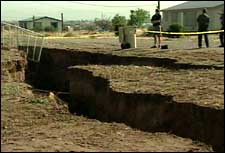
Get entire story and video from AZ Daily Star
There are 20 fissures north of San Tan mountains in Central Arizona and still there is no significant water management in 80% of Arizona—
What will it take??
USGS pinpoints Arizona
subsidence problems
Areas with potential subsidence problems
USGS report on Subsidence in Pima County
Land Subsidence, Earth Fissures Change Arizona's Landscape
by Joe Gelt, U of A
Non-regulated mining water use
even in Active Management Areas
Water Impairment in AZ —
What is the source?
Mining causes depletion of wells in Arizona
Coming soon: Rosemont Mining Companies claims 46 wells!
Pollution
Links to Information on Superfund sites in Arizona
Tucson
Phoenix
Remainder of state
EPA's Superfund Web Site
Protection of Streams and Riparian Areas
Protecting Habitat
Arizona 's Futile Effort to Separate Groundwater from Surface Water
U of A Professors Robert Glennon and Thomas Maddock III
Fact Sheet of resources connecting
Groundwater and Surface water
US Geological Survey
Managing the Interconnecting Waters: The Groundwater-Surface Water Dilemma
A great review by Joe Gelt of the intricacies and history of the dilemma. December, 1994
Agricultural Water Use
Agriculture is the top water user—where does the water go??
Arizona water Use by Sector—USGS
In 2000 agriculture used 80% of both ground and surface water in Arizona. Why grow cotton instead of food crops in Arizona? Here's your answer:
Number of AZ growers who receive subsidies for cotton is over 10% of top 200 growers in U.S.
And it's not easy to grow cotton here? Growers have to use extra pesticides, fungicides and fertilizers. Pollution of water from these sources has no regulation in AZ.
Cotton report
Arizona is second in nation in payments for cotton subsidies. We have to calculate how much of agricultural water goes to subsidies. There are mountains of water studies—2000 pages of reports annually, but no one calculates this relevant number!
An Arizona Supreme Court Judge has commented on the problem in 1999:
"The Arizona legislature has erected statutory frameworks for regulating surface water and groundwater based on Southwest Cotton. Arizona's agricultural, industrial, mining, and urban interests have accommodated themselves to those frameworks. Southwest Cotton has been part of the constant backdrop for vast investments, the founding and growth of towns and cities, and the lives of our people."
See entire case
_______ . _______
Possible Solutions:
2001 Report: Water Conservation in Pima County
Report of effectiveness of Groundwater Recharge Basins in Chandler, AZ
Thanks to Chandler Water Dept. for sharing this wonderful report!
Photos of Chandler Projects
Photos of Chandler Neighborhood project
Barriers and Dams in Rivers
____ . ____
About Groundwater Awareness League, Inc
Current Projects—
Save the Santa Cruz Aquifer
Protecting an underground water source from pollution from mining operations.
www.savethesantacruzaquifer.info
Mining Law Reform
Giving relevant information on the process of mining law reform in U.S.Congress
www.mining-law-reform.info
G-A-L files report with Securities
and Exchange Commission in regard to Phelps-Dodge/Freeport-McMoRan merger
YouTube on Urgency of Mining Law Reform
(Thanks to assistance of Carolyn Brown
and Access Tucson)
Arizona: See info on mining, including Sierrita, Rosemont and Superior (Apache Leap and Oak Flat)
Contact: Nancy Freeman Disclaimer: Fair use notice: The material in this site is provided for educational and informational purposes only. The information on this site does not constitute health, legal or technical advice. Groundwater Awareness League works with other non-profit environmental groups involved in conserving water in Arizona: Friends of the Santa Cruz River Dragoon Conservation Alliance and beyond--
Executive Director
520/398-4340
e-mail us
Our intention is to provide accurate data and information. Every attempt has been made to do so. If anyone finds any inaccuracy, please contact us and we will remove or correct the data immediately.
This site contains copyrighted material the use of which has not always been specifically authorized by the copyright owner. It is being made available in an effort to advance the understanding of environmental, political, human rights, and social justice issues.. It is believed that this constitutes a 'fair use' of any such copyrighted material as provided for in section 107 of the US Copyright Law. In accordance with Title 17 U.S.C. Section 107, the material on this site is distributed without profit to those who have an interest in receiving the included information for research and educational purposes. If you wish to use copyrighted material from this site for purposes of your own that go beyond 'fair use', you must obtain permission from the copyright owner.
If it is our stuff—use it freely!
Center of Law in the Public Interest
Arizona Public Interest Research Group
Sonoran Institute
Save the Santa Ritas
Sierra Club
Sustainable Tucson
Friends of Madera Canyon
Coronado Ranch project

Praise for Nature--—the experience of living in a National Forest and honoring the trees, flowers, birds and wildlife! Take a retreat in the woods to rejuvenate your spirit! No time-- take one vicariously and get inspired to take your own! You will get ideas of what you can do, look for and experience when you do have time to take a retreat in the woods for the restoring of your soul and energy!
You can download it to a Kindle, I-pad, I-pod--or your computer.
Your purchase will help fuel and fund the effort to save the trees in our National Forests!
If you won't drink it, don't put it in our water!
